Pianodrome Blog
Piano action in words.
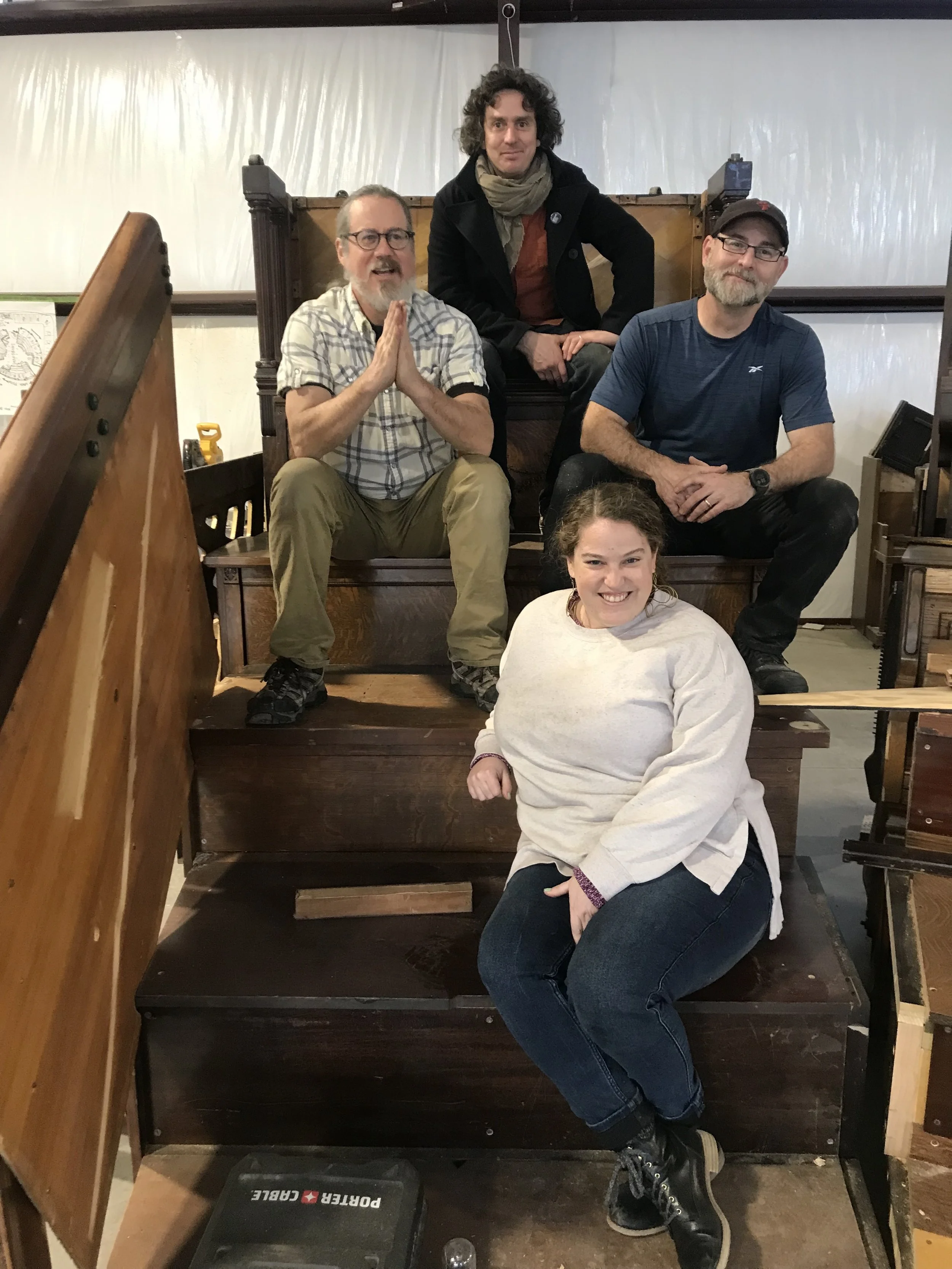
Today we started
10 January 2023
Today we started pulling pianos apart. After all the years of planning, the months of anticipation, the weeks of preparation and the days of travelling it’s great to finally be here and hands on.
10 January 2023
Today we started pulling pianos apart. After all the years of planning, the months of anticipation, the weeks of preparation and the days of travelling it’s great to finally be here and hands on.
It's a crisp cold bright morning. Blue skys and frost on the grass. Lead builders Shawn and Greg are in early today. After Quinn’s gourmet breakfast of ‘huevos pericos’ – eggs with chopped onions and tomatoes – and my first turn driving the rental car - on the right-hand side, with the steering column on the left and an automatic everything which surprisingly turns out to be almost too easy - we join them. Following the satnav I haven’t a clue where we are. Everything looks similar. Without a car here, nothing is possible. There is just so much space. It’s all eight lane highways, trees, a river and at a junction, large empty parking lots and single storey buildings with big signs; a McDonalds, a gas station, a church; food for your body, your car and your soul. There is a billboard with a grinning moustachioed lawyer and the slogan ‘Hit by a Truck?’.
Already the warehouse filled with festival floats, theatre sets, tools, shelves of boxes of assorted stuff from various past projects and an enormous pumpkin feels a like home from home. Greg and I pose with an outsized lever with the words ‘off / on’. This is going to be fun.
Broadly speaking and to my relief the America pianos are similar in construction to the European pianos that we are used to. This means we won’t have to make any dramatic changes to the designs. They seem to be on average less tall, deeper and of solid construction, in fact quite a few of them are player pianos with pedals and bellows and elaborate steam-punk mechanisms inside.
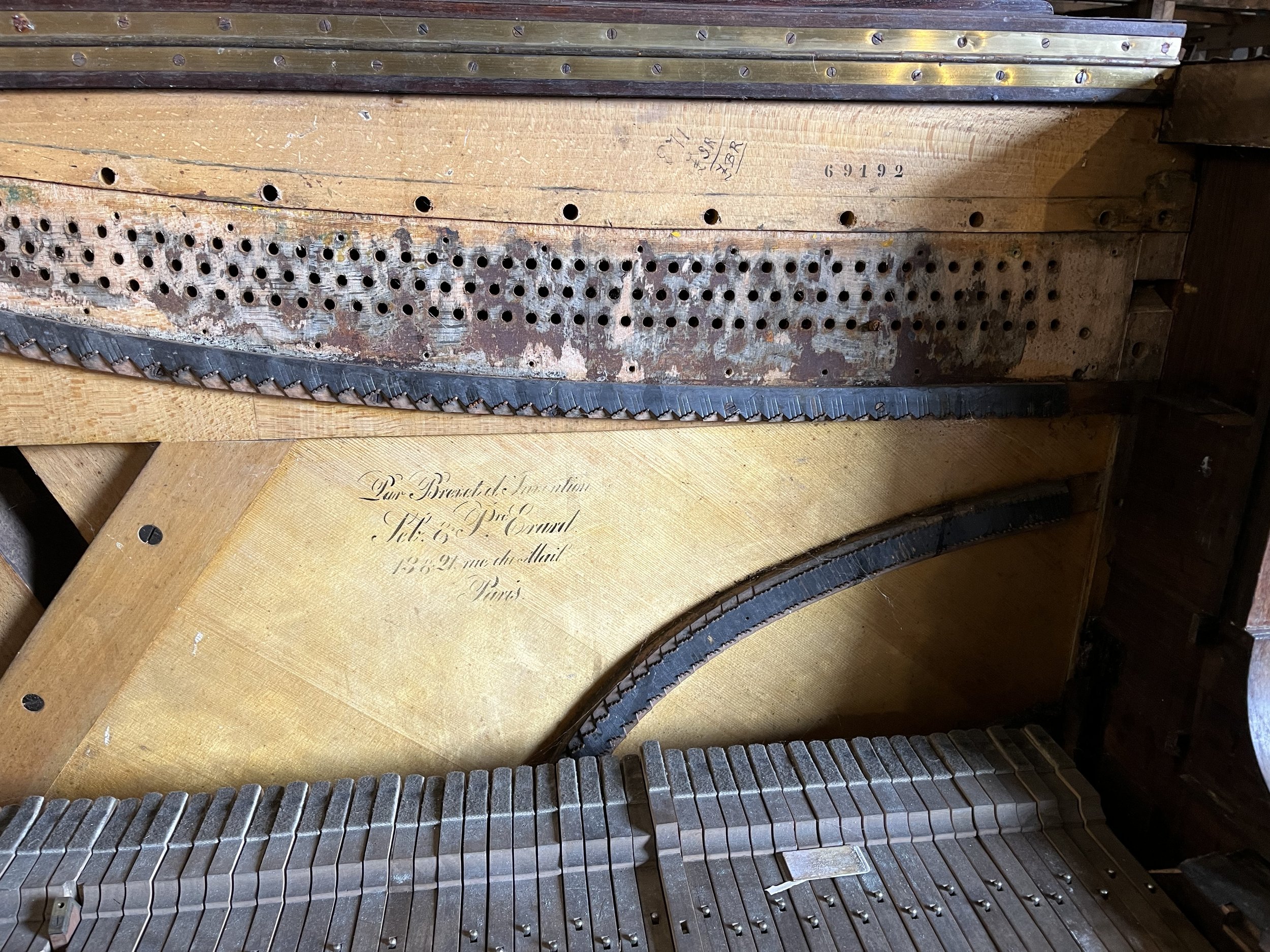
Shawn starts pulling apart a piano and finds treasure under the keys. As well as old coins, and ephemera, bits of paper, a rubber band, a paper clip he finds, of all things, dog food. Lots of it. How, I ask you, did that get there?

Kibble in a Kimble
Our producer this side of the pond, Kat, arrives and we meet with Matt and Laura and Tom from the Pianodrome back in Scotland via Zoom. We swap jokes and progress reports. How strangely normal it is to chat despite the 4000 miles between us. Then Pete and Steve arrive with a van full of half dismantled pianos. It’s clear that previous attempts at building Pianodrome Charlotte got much further than I had thought. This is great news as it will save us a lot of work this time round. The rest of the as-yet undismantled pianos, two shipping containers worth, collected and stored over the last 3 years, arrive on Friday. We get to see inside the Grace Church earmarked as our venue come spring on Thursday.
Today Kat joined the dismantling crew in the afternoon and it feels just like countless piano dismantling sessions previously with tunes on the stereo, folk swapping stories and helping each other out with tricky corners and heavy lifts, exciting discoveries of small treasures and wonder at these extraordinary constructions; historic objects at the intersection of engineering, craftsmanship and music.
The sun streams in through the big doors open to the fresh air. This feels like it’s going to work.
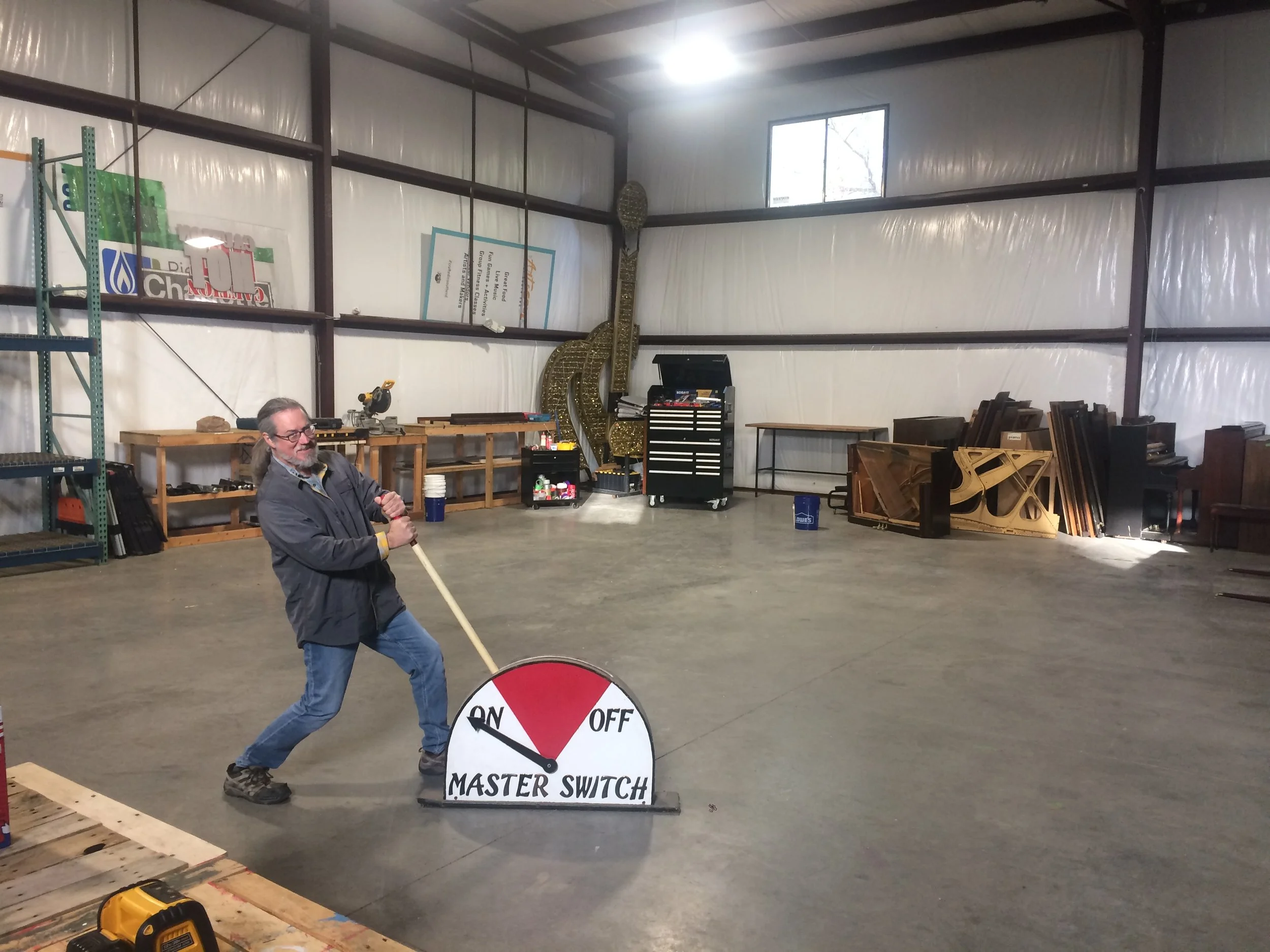
Greg turns it on for the camera
Pianodrome Charlotte, North Carolina
The first Pianodrome in the US. When Robert Krumbine the creative director of Charlotte Shout festival asked at the Pianodrome at the Pitt in 2019 'how do we make a Pianodrome' I think I said 'you just need to start by getting a warehouse and filling it with pianos'. Well now they have a warehouse and 40 something pianos and for the next three weeks they also have me.
When Robert Krumbine the creative director of Charlotte Shout festival asked 'how do we make a Pianodrome' at the Pianodrome at the Pitt in 2019, I think I said: 'you just need to start by getting a warehouse and filling it with pianos'. Well, now they have a warehouse and 40 something pianos and for the next three weeks they also have me.
According to Google Flights which compares the carbon footprint of the various transatlantic routes on offer, my flight dispersed around 450kg, about two upright pianos worth or perhaps a very large concert grand, of CO2 into the atmosphere over the ocean to get me here. A geodesic ribbon of arctic guilt tethers me to my homeland 4000 miles away. I had better make this trip count. But my CO2, along with the 100 or so more tonnes required to fire the other couple of hundred passengers, their agglomerate baggage and the crew to serve and pilot them, the fizzy drinks, the inflight entertainment system, the hulk of the plane itself at close to the speed of sound half way across the globe, has surely already dissipated.
I felt sick. Not out of moral panic or, for that matter, any other kind of panic. I love flying despite the occasional dark spiral of the mind; 'what if we crash in the sea will I ever see my children again?' etc. I felt sick from the many-times recycled air, the unpredictable juddering, the noise, the cramped and sweaty-backed seat and the bright sun at night as we chased it west, never allowing it to set. Unnatural. Yuck. Man, was I glad to get off that plane.
Despite my moral misgivings and occasional physical discomfort I have already started to enjoy myself. There is an excitement in setting out your suitcase and your shoes the night before. Taxi in the dark to the airport. Orange-gold sunrise soaring through high, cold cloudscapes on invisible air. Breakfast at Heathrow. Shawn picking me up at Charlotte International and driving me to our air B and B in Rock Hill, South Carolina. Roads and trees. Lots of trees breathing the CO2...
And the arrival of my best man Quinn. I haven't seen him since my wedding 8 years ago but we still laugh into the night. He has flown from California so time-wise we are almost exactly out of sync. Since his Mum's house in Paradise CA burned down she has moved to Ashland Oregon (you couldn't make it up) where she helped an old bookseller set up shop with her insurance payout. Quinn has brought me a book. Creative Processes in the Human Environment. It fits perfectly with this project and with another book I was reading on the plane: 'Why we make things and why it matters'. What is a Pianodrome in fact? An interactive sculpture? A venue? A movement? An elaborate piece of furniture? As I understand it I am here to try to help to seed a creative community.
The Historic African Methodist Episcopal Zion Church where we are installing Pianodrome Charlotte is in the middle of a district where in the early 20th century this was at the centre of one of the most prosperous communities of people of colour in the world dubbed ‘Black Wall Street.’ In the 1950’s name of development hundreds of people of colour were forcibly rehoused to the suburbs to make way for a public park in a process which Robert described with sadness as 'predictable’. The Grace Church is one of only three historic buildings still standing. This feels like a complex and potentially volatile environment to be installing an interactive sculpture and a significant landmark culturally, geographically, architecturally and spiritually. Our lead builder here, Shawn, says the church and the Pianodrome are a 'match made in heaven' and I agree. But how does this translate to earthly reality?
Maybe music is the key? There is a Jazz bar next door which apparently has a good vibe and strong roots in local black communities. Also a choir associated with the church with gospel heritage may sing in our Pianodrome. Andrea Baker's 'Tales of Transatlantic Freedom' is touring the US on the back of her at the Old Royal High during the Edinburgh Fringe last summer. There are possibilities. And race is one of many axes on which diversity of the creative community may be measured.
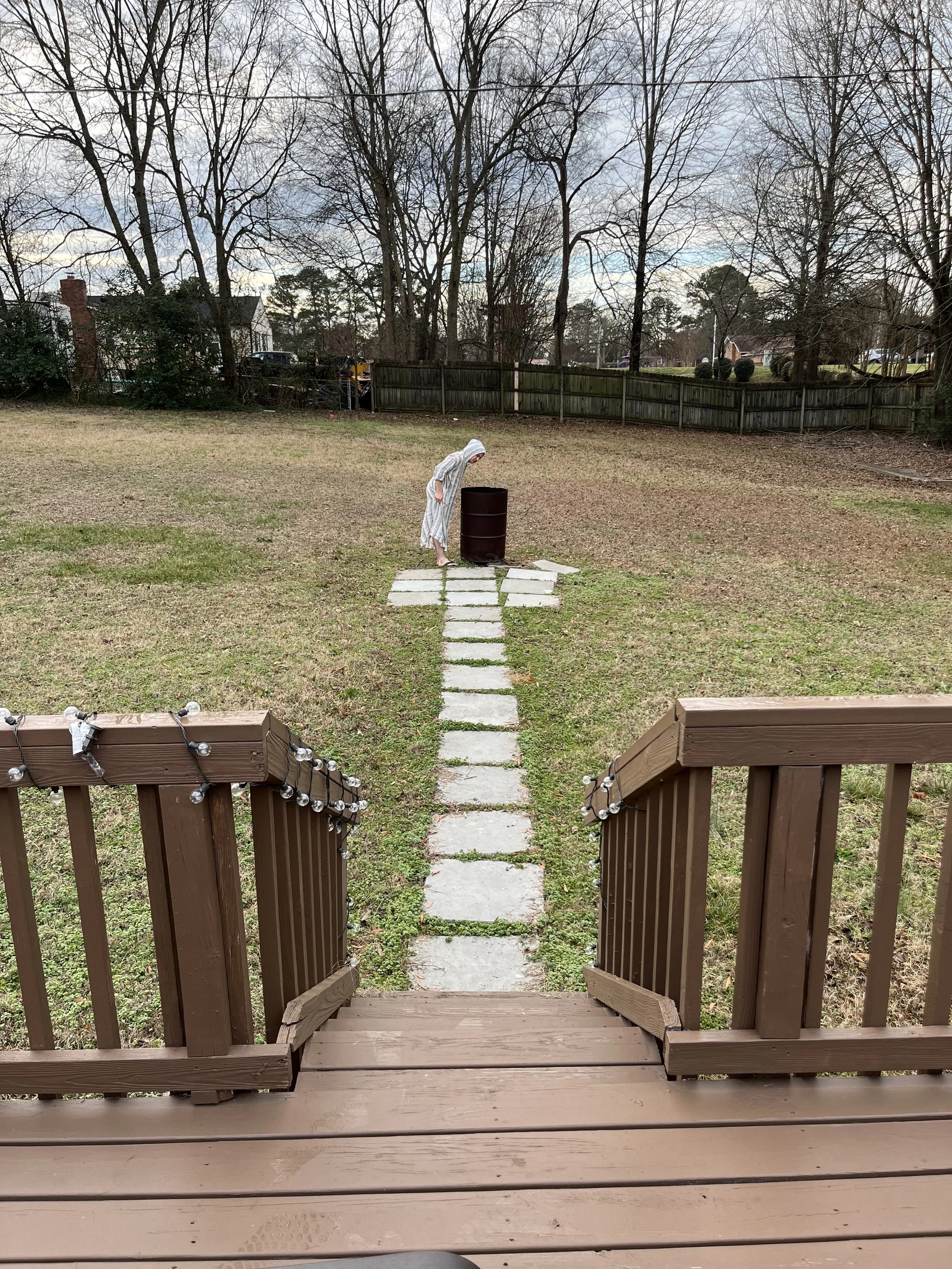
It's getting light. The sun that finally got away over the horizon last night has already come back round this new day and caught up with us. Quinn gets up. He is three hours behind and I am five hours ahead. I am wearing the tattered remains of a Moroccan djellaba he gave to me 20 years ago as a night shirt and he takes a picture of me in our big garden where the trees line the freeway behind. I am looking into an oil drum where we might burn piano offcuts. He remarks that my white pointy hood makes me look a bit like an imperial wizard of the Klu Klux Klan. Rock Hill is where the railroad, the product of the life force of people enslaved to the empire of my ancestors once came to a full stop on the big rock that gave the town its name. Probably shouldn't wear that outside. Looking into the darkness of the drum and thinking back on the last 24 hours I wonder where I am and what my journey holds?
To my surprise and delight in the departure lounge of the Edinburgh airport I stumbled across, of all things, a smallish grand piano. Some 250kg of endless carbon-free entertainment for the assembled transitory anonymous. I took the opportunity to sit and improvise trying to be gentle so as not to jangle the nerves of my co-travellers this early in the morning. I was probably playing for nearly an hour. I finished with a couple of Bach preludes in C major and then C minor and when I had given way to a small child trying some bass notes I noticed, with a wry smile, the words on the purple circle on the floor which serves as the stage; 'haste ye Bach'.
A young woman who had come to sit nearby for most of my performance, a gesture which I had felt in some way conferred the freedom of the departure lounge on me, smiled and said 'thank you for this good time'. I thanked her in turn. This exchange marked for me, in a most subtle and powerful way, the start of my journey. Apt that it should be a piano, with its sequestered stories and carbon and its gift - the spark of creative connection - that should set me on my way.
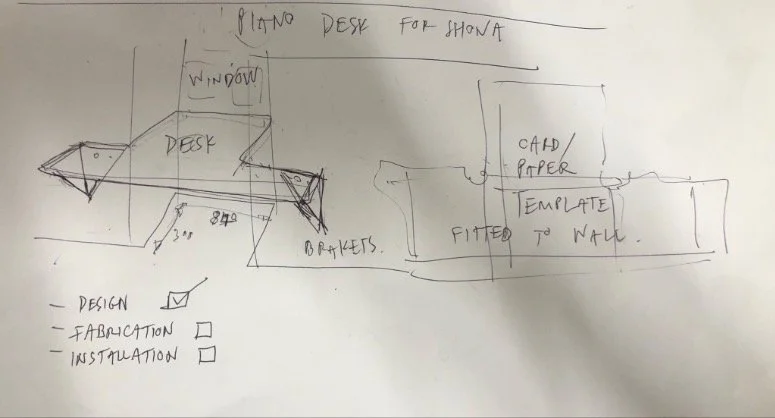
The piano desk
Using materials from discarded pianos is a way of honouring the craftsmanship that went into building the pianos sometimes over a century ago, and giving new life to parts that provided the instrument its music and character. It is also a way of making the most of what is available, limiting waste and the need to produce new objects for a specific purpose.
As part of this vision, bespoke furniture can be built from piano parts, and in the case of this Studio Pianodrome project, a desk was designed to fit into the small space available by a window.
Studio Pianodrome repurposes piano parts to create and build new objects that can be used day to day, reusing wood panels, screws, keys and all sorts of bits and pieces that can be found in a piano that is no longer played.
Using materials from discarded pianos is a way of honouring the craftsmanship that went into building the pianos sometimes over a century ago, and giving new life to parts that provided the instrument its music and character. It is also a way of making the most of what is available, limiting waste and the need to produce new objects for a specific purpose.
Design and drawings by Tim Vincent-Smith.
Photo credit: Shona MacArthur
As part of this vision, bespoke furniture can be built from piano parts, and in the case of this Studio Pianodrome project, a desk was designed to fit into the small space available by a window.
A piece of wood was chosen, with an ideal width for a small table and a beautiful pattern of lozenges of different shades. The design allowed for the desk to fit around the walls near the window, using the shape of the available space and of the piece of wood together.
In the spirit of upcycling as much of the material as possible, the spare pieces of wood that were cut to shape the desk were added to the design as a small shelf and a ledge linking it to the table, therefore using the entirety of the piece of wood. A few piano keys were added as brackets for the desk and a leg providing support for the shelf.
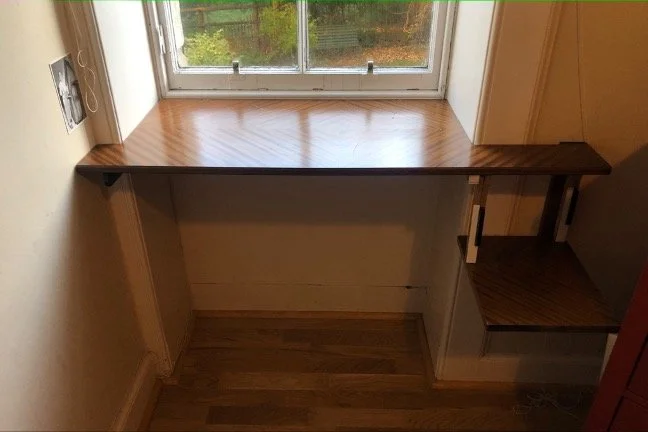
Photo credit: Shona MacArthur
The final result is a beautiful patterned desk that fits nicely into the window sill, held up by two piano keys, one black and one white that are visible at the edge of the table. A small shelf with the same pattern is right below the side of the desk, held up and linked to the table by the other piece of wood cutting, and by another whole piano key, using its natural angle to form a leg for the shelf.
Finally, two sets of a white and black key link the desk to the shelf, adding to the piano look of the desk and providing support for notebooks or other objects. This Studio Pianodrome project upcycled the entirety of the chosen materials from a disused instrument into a unique, bespoke piece of furniture.
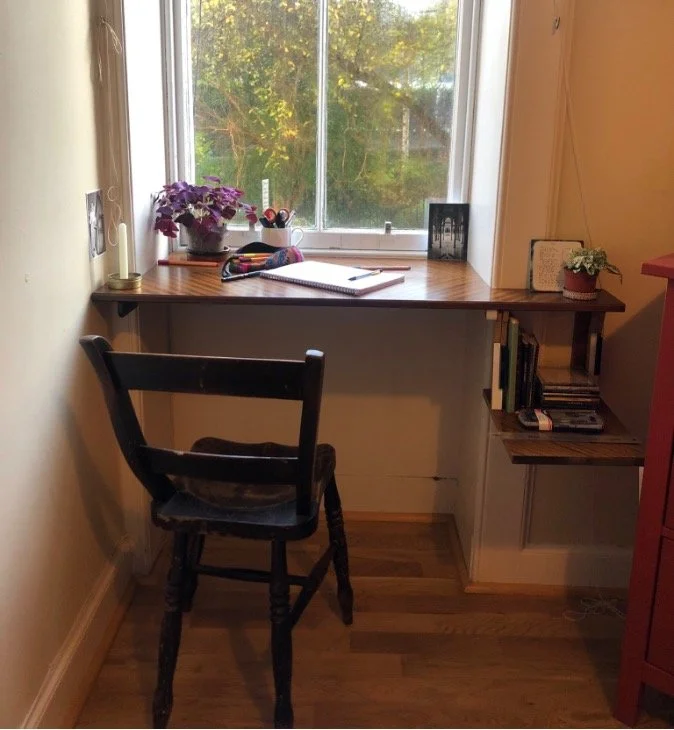
Photo credit: Shona MacArthur
The piano top
‘If you are in a shipwreck and all the boats are gone, a piano top buoyant enough to keep you afloat that comes along makes a fortuitous life preserver.’
R. Buckminster Fuller, 1966.
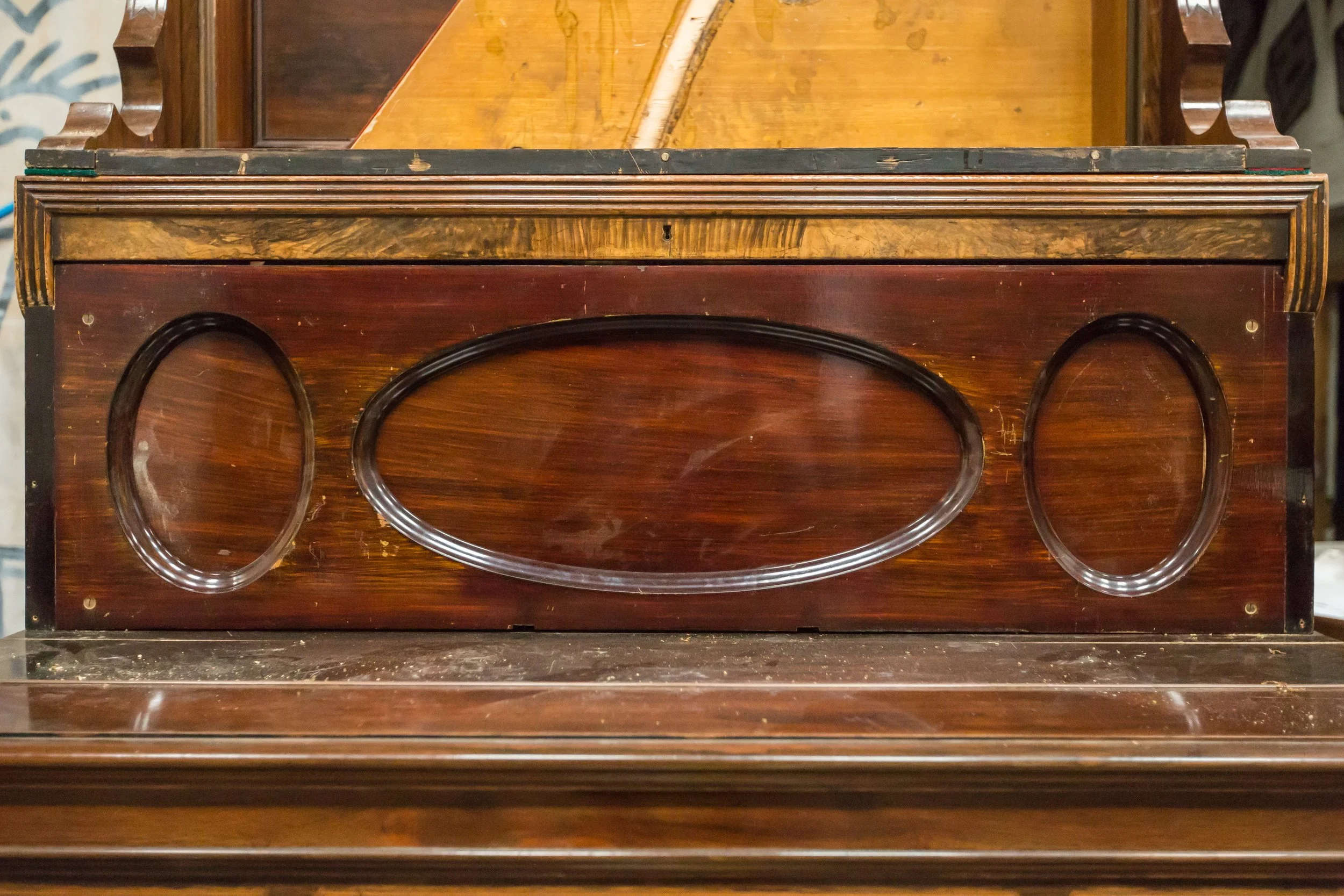
If you are in a shipwreck and all the boats are gone, a piano top buoyant enough to keep you afloat that comes along makes a fortuitous life preserver. But this is not to say that the best way to design a life preserver is in the form of a piano top. I think that we are clinging to a great many piano tops in accepting yesterday’s fortuitous contrivings as constituting the only means for solving a given problem. Our brains deal exclusively with special-case experiences. Only our minds are able to discover the generalized principles operating without exception in each and every special-experience case which if detected and mastered will give knowledgeable advantage in all instances.
Excerpt from ‘Operating Manual For Spaceship Earth’ by R. Buckminster Fuller, 1966.